Money can give freedom and take away peace of mind. A company should not be your only asset
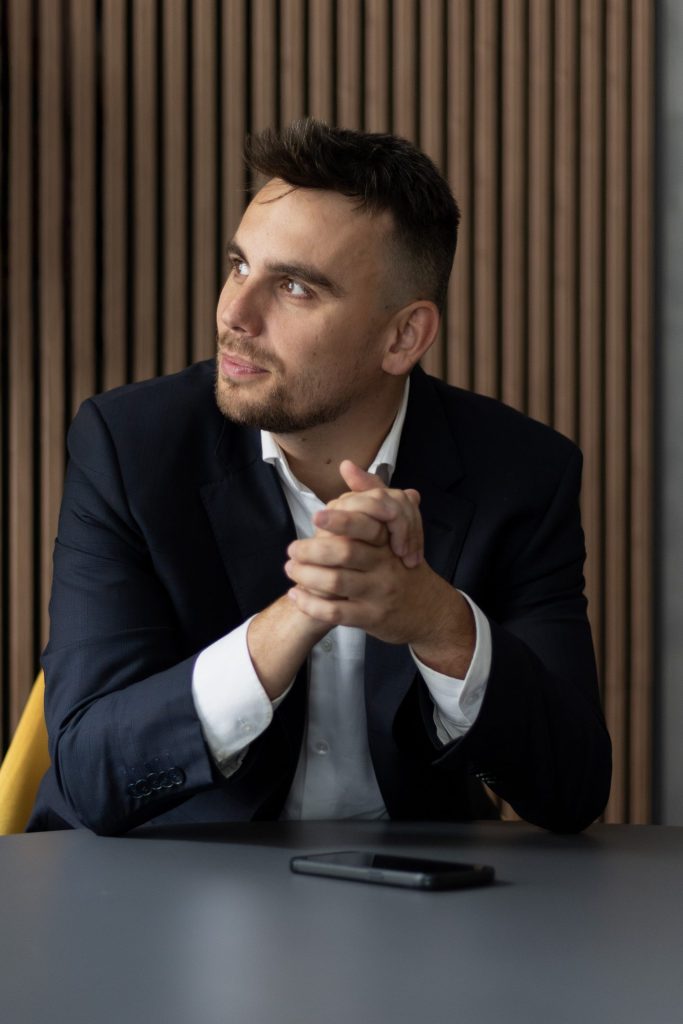
How can you work with money in a way that brings freedom rather than stress? Bohumil Žitný is one of the advisors who, instead of quick fixes, relies on long-term strategy, discipline and calm. In the interview, he explains why it pays off to build your own brand, what mistakes people most often make when managing their finances, and what led him to Prague’s Clubco – even though he already has an office elsewhere.
„When I do something, I need to do it fully and really well – otherwise it destroys me. That created a strong need in me to build things that make sense and have a broader impact. Not just to make money, but to create value that people truly appreciate,“ says Bohumil Žitný.
He has been working in finance for more than ten years and today works as a consultant under his own company Žitný & partneři, which he founded in 2024. He is engaged in wealth management, which he sees as “the royal discipline” of the field. “I realized that the greatest value is not in products, but in managing wealth as a whole. Wealth management allows us to work strategically and connect business, investments, real estate and family goals into one coherent plan.”
He describes himself as an ambitious visionary with his feet on the ground. “My ambition is the need to build a company that will take care of clients’ assets in a long-term, cultivated way – and that will be successful. I’m inspired by how wealth is managed in Switzerland, the UK or the US, with a strong emphasis on strategy, calm, and partnership,“ he explains. What keeps him grounded, he adds, is everyday reality: numbers, discipline and responsibility.
A path to money and reputation
His professional journey was not straightforward. As a child, he dreamed of becoming a football player and later a programmer. He entered wealth management through the role of a junior financial advisor. Before deciding to work independently under his own name, he spent more than ten years at the advisory company Broker Trust.
Why did you decide to operate under your own brand?
My own brand gives me the freedom to be a true partner to my clients. I don’t follow third-party business plans – I build long-term strategies that make sense to the client.
Žitný & partneři stands for responsibility, openness and expertise – not on the volume of products sold. We work in a fee-based model, where the client pays us directly, not banks or other financial institutions. Our compensation is directly tied to how well the client’s assets perform.
And I chose to use my own name because I feel that in this business there is nothing more valuable than personal reputation. When you put your name on the door, you can’t hide.
How challenging is it to work independently and run a financial advisory company?
It’s challenging, but fair. We carry full responsibility for the result and reputation. That naturally filters both the clients we work with and the style of cooperation.
How has the financial environment changed during your career?
Clients are far more demanding today. Fortunately, they no longer fall for fairy tales about guaranteed or extraordinary returns. Instead, they want their assets to be well managed, resilient to uncertainty, and prepared for less favorable economic scenarios. The financial environment itself has become more complex – as have client expectations and competition. This ultimately benefits everyone. Clients are more informed, but also more overwhelmed, which increases the need for someone who can filter information and create structure.
What do clients typically come to you with?
Most often, they have earned or inherited more money, but they are not sure of a truly effectively organized asset that they would have under control. We work on structure, risk management, diversification, future income, and the separation of personal and business finances.
Do you work primarily with individuals or companies?
Primarily with individuals – entrepreneurs, managers, specialists. A company is often part of the solution, but the client is always a person and their family.
We’re also invited into companies to educate employees, for example about DIP (Long-Term Investment Product – introduced in 2024 as a new way to prepare for retirement, offering broader investment options than traditional pension schemes). However, we don’t interfere with how companies run their business. We don’t tell people how to do business.
Who do you choose not to work with?
With people who are looking for shortcuts, supertrends or unattainable guarantees. And with those who are unwilling to think long-term and in context.
What makes you different from other advisors?
We look at wealth as a whole. We know how to slow clients down when needed. Because we’re not motivated by selling products, the client’s long-term prosperity always comes first.
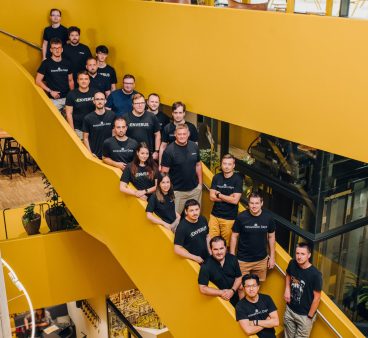
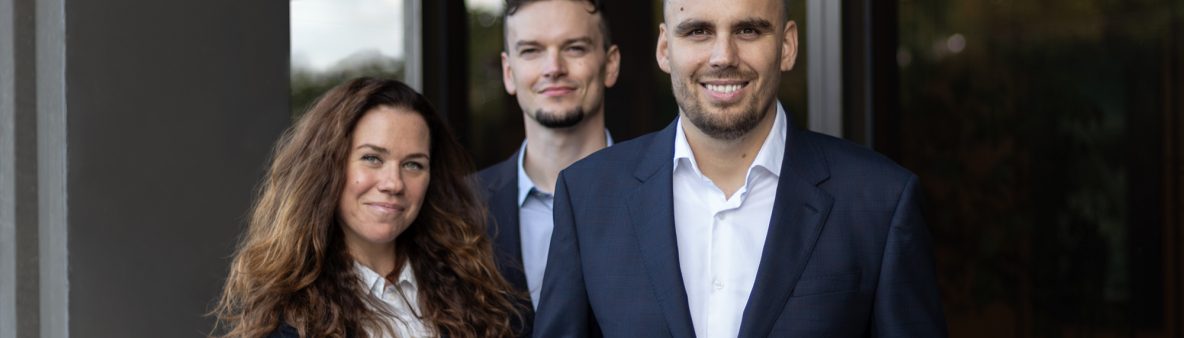
I’m building an advisory firm where everyone has their own specialization – I handle communication, we have a mortgage expert and a capital markets analyst. We simply don’t want to be “jacks of all trades.”
Education and diversification pay off
Over time and with deeper education, Bohumil realized that a financial advisor should not be just a product salesperson. “A product will never fix a bad strategy. Today, we start with the client’s needs and strategic goals – with comprehensive wealth management.”
Education is important to him and he sees it as part of his responsibility. In addition to sharing his know-how with clients and other interested parties, he does not forget about his own development. “Education is a core pillar of my firm. I’m constantly learning – professionally and personally. I hold the EFA (European Financial Advisor) certification and this year I’m completing the EFP (European Financial Planner) exam, which only about 60 advisors in the Czech Republic have. I follow trends, study, consult with people smarter than me, work with a business coach and read self-improvement books. Complacency and the feeling that ‘I already know everything’ is the biggest risk.”
Through his work, he has seen firsthand how money can provide freedom – or take away peace of mind if handled poorly. The most common mistakes he sees include:
- not separating personal and business finances
- overly conservative strategies and excess cash sitting in banks (ignoring inflation)
- a false sense of security and insufficient diversification
- emotional decision-making based on perceived expertise
- postponing important decisions “until later”
How should entrepreneurs diversify between business and personal assets?
A company generates profit – and risk. It should never be the only asset. Part of the capital should systematically flow into personal assets that are independent of the business. The exact ratio is individual, but zero diversification is always a mistake.
What is worth investing in nowadays?
First and foremost, you need an investment plan – and you must understand what you’re doing and why. Without one, it’s only a matter of time before the market or your own decisions punish you.
From a product perspective, diversified, transparent, and liquid solutions make sense. ETFs (Exchange-Traded Funds) are popular today and can be useful – if you understand how to use them, combine them, and define their role in your portfolio.
And what would you not recommend?
Blind bets, attractive stories, promises of certainty and investments the investor doesn’t understand – regardless of the amount. The Czech market is full of extremely risky bond issues that people mistakenly consider safe. That’s very dangerous. Examples include Arca Capital, Solek or Fair Credit.
When is the right time to start planning for retirement?
As early as possible. Not because of the yield, but because of time. Time is the most important asset in investing. Start tomorrow. Why? In 2000, there were five workers per retiree. Today, it’s about 3,5. By 2060, it will be only 1,5. Our pension system is fundamentally unsustainable and will likely provide little more than a basic social benefit in the future.
Community as a source of inspiration
According to Bohumil, improving financial literacy starts with thinking in context – and asking questions. “The previous regime taught people not to take care of private capital or think in intergenerational terms. That’s a huge loss.”
With clients, they sometimes use the Financial Freedom Game, based on real-life scenarios – a simple and practical way to understand financial decisions.
Although he primarily meets clients in his own office near I. P. Pavlova, he also works from a coworking space and occasionally visits Clubco in Nupaky. “Clubco is a creative oasis for me – a place to think strategically and recharge. It gives me calm, energy, and contact with inspiring people outside the financial bubble. Success is contagious, and I like to get exposed to it,” he says with a smile.
Final recommendations
Repetition is the mother of wisdom, so we’ll close with key principles every freelancer or business owner should follow:
- Separate personal and business finances.
Otherwise, you’ll never know where you truly stand. - Diversify income and assets.
Your company is an engine of profit – but build other pillars as well. - Have an investment plan and stick to it.
Even when emotions push you in the opposite direction. - Think long-term.
Short-term results are misleading; time reveals the truth. - Build systems, don’t chase returns.
Calmness is what allows good decisions – especially in difficult times.