
She once believed she would spend her whole career in the corporate world. But after two decades, Štěpánka Duffková decided to go freelance and start coaching. Today, she helps business owners find direction and move their companies forward. And Clubco in Nupaky has become the base for her activities.
Just a few years ago, Štěpánka Duffková would have described herself as a “corporate girl”. She was successful, content and convinced she would stay in the corporate world forever. But then came a turning point.
“My husband and I went to Cuba and cycled around the island. I saw people sitting by the sea for hours, just watching the water. At first I thought: poor people. And then I realized how poor I actually was – always rushing somewhere, but not really knowing where or why,” she recalls.
That was when psychosomatic problems began to appear. “Doctors kept telling me I was completely healthy. The problem was somewhere else. At the same time, I had a new boss whom I didn’t see as fair, and fairness is a very important value for me.”
Eventually she realized she had a choice. “I could stay, make a lot of money, but possibly ruin my health. Or I could leave and start over.” Her decision was also shaped by personal experience. “My husband had cancer, and my mother died of it. That made me realize that health matters more than anything.”
The power of sharing
The beginnings outside the corporate world were far from idyllic.
“Honestly? I cried a lot. There were times when I felt like I couldn’t do anything.”
Gradually, however, she returned to what made sense to her. During her corporate career she had completed coaching training, which later led her to explore other approaches as well. The real turning point came when she discovered a concept designed to support small and medium-sized businesses by combining mentoring, coaching and so-called mastermind groups.
“I went to the US, completed the training, and worked under a franchise for five years before deciding to go my own way,” she says as we sit together in Clubco, while she sips yerba mate.
Mastermind groups – in her case known as the Business Panel – have since become a key pillar of her work. When she first introduced them in 2014, the reaction from entrepreneurs was rather lukewarm.
“I was excited because I thought it was a brilliant concept. But the reality was different. Nobody wanted it. People were afraid to share their challenges and were worried about competitors.”
Today the situation is very different. “The shift has been huge. Entrepreneurs are much more open and understand the value of sharing.”
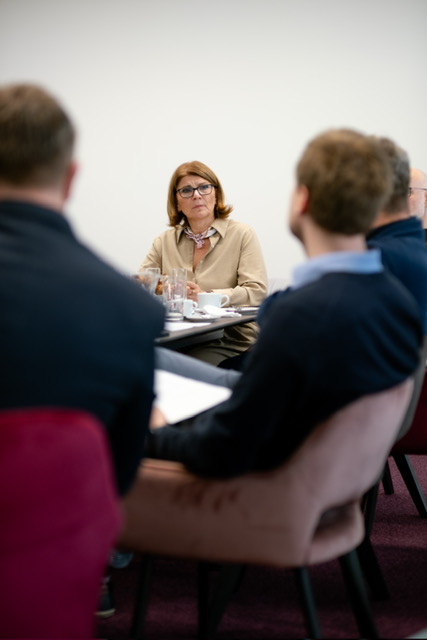
The Business Panel brings together owners and CEOs of small and medium-sized companies from different industries and stages of development. “I emphasize diversity. Companies that have been operating for decades meet those that were founded recently. That mix is incredibly valuable.”
Meetings focus on concrete issues – from strategy to everyday operations. Participants share what worked for them and what didn’t.
“A mastermind can save you from many dead ends,” Duffková says. “I often describe it as a kind of board of directors – a space where entrepreneurs are not alone when making important decisions.”
Some participants join through a monthly membership and attend regularly, while others come when a specific topic interests them. Guest speakers often join the sessions as well – experts in areas such as intergenerational leadership, cybersecurity, corporate finance or recruitment.
Finding direction
In her work – whether during group sessions or individual coaching – Štěpánka repeatedly encounters similar challenges. “One of the biggest problems entrepreneurs face is delegation and time management. The founder of a company often feels irreplaceable. They are used to being the driving force, but as the company grows they have to rely on others. And that is difficult for many people.”
This is closely related to another common issue. “Entrepreneurs often work in the company, but very little on the company. They rarely stop to think about the direction they are heading.”
Being able to clearly define personal and business goals is equally important.
“Many companies simply want to grow. But the question is whether that growth will actually bring them what they want. In this context I often quote a proverb: When you don’t know where you’re going, every road is long.”
For entrepreneurs who feel stuck or lost, Duffková recommends a simple step: getting thoughts out of their heads. “A lot of people keep everything in their heads – ideas, fears, plans. But until they say it out loud or write it down, they cannot really work with it.”
Sharing often leads to important “aha” moments.
Discovering Clubco
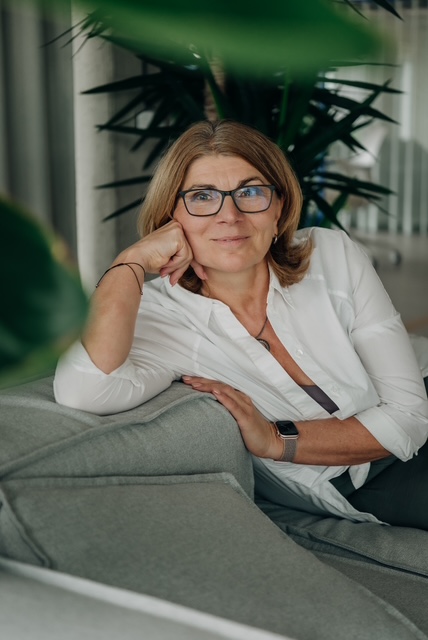
Today, she also connects part of her activities with the Clubco coworking space in Nupaky.
“I discovered Clubco thanks to Bohumil Žitný, whom I coached. When I first saw the place, I thought: maybe I’m dreaming – it’s almost around the corner from my home and it’s fantastic.”
While she still prefers her home office for deep, focused work, Clubco has become the home base for Business Panel meetings. She also uses it for coaching sessions with clients who prefer to meet outside their company offices.
Meaning, values and baking
Over time, her approach to work and career has changed. At one point, she wanted to become one of the most influential women on LinkedIn. “Today I say I’m one of the happiest instead,” she laughs. “I no longer feel the need to build a big career. What matters is that my work is meaningful and enjoyable.”
Her approach to social media reflects this mindset. “I follow a simple rule – one post a week. That’s it.”
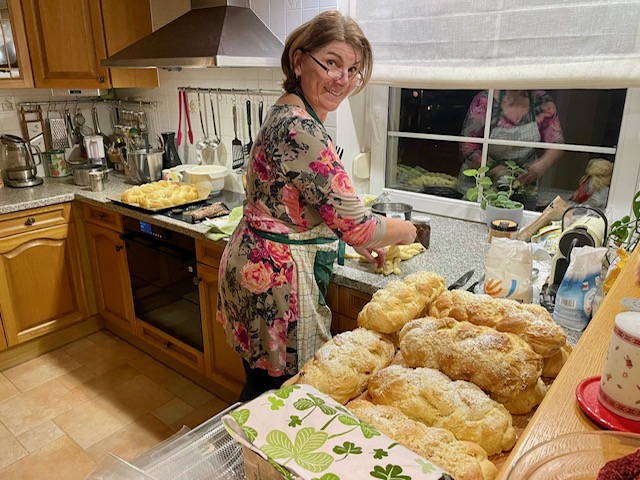
That leaves her more time for other activities – including baking. “I bake something for every Business Panel meeting. In twelve years I haven’t skipped a single one,” she says with a smile. “Some people claim participants come just for the food, but I hope that’s not the only reason.”
What started as a small gesture grew into a tradition. “At the beginning, when I didn’t have many clients, I started baking Christmas pastries (vánočka) as gifts. And now there’s no way back.”
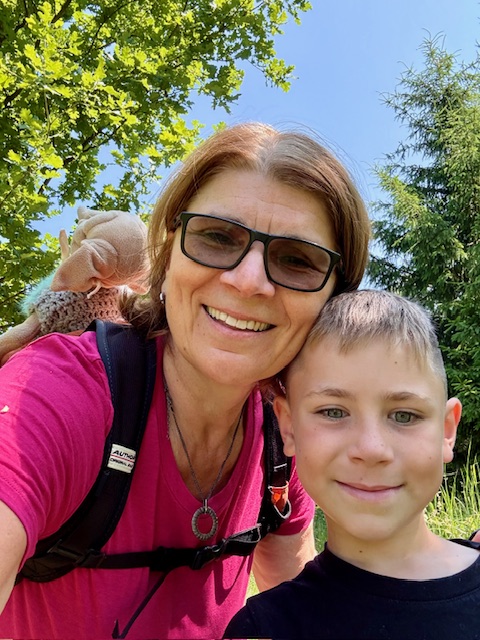
Thanks to her son, she also became a rugby fan. “We had two options – average football or excellent rugby. The choice was clear,” she laughs. “Rugby is an amazing sport built on strong values.”
She herself remains very active. She walks in the forest every day with her dog, does Pilates or goes to the gym with her husband, and enjoys cycling – something she often combines with active holidays in France. That is also why she is currently learning French.
Her story shows that entrepreneurship is not only about performance, growth or numbers. It is also about finding your own path. “We started businesses for freedom, money and time. And sometimes we end up having none of them,” she says.
That is why, according to her, it is important to stop from time to time and ask a simple question again: Am I going where I actually want to go?
How can you work with money in a way that brings freedom rather than stress? Bohumil Žitný is one of the advisors who, instead of quick fixes, relies on long-term strategy, discipline and calm. In the interview, he explains why it pays off to build your own brand, what mistakes people most often make when managing their finances, and what led him to Prague’s Clubco – even though he already has an office elsewhere.
„When I do something, I need to do it fully and really well – otherwise it destroys me. That created a strong need in me to build things that make sense and have a broader impact. Not just to make money, but to create value that people truly appreciate,“ says Bohumil Žitný.
He has been working in finance for more than ten years and today works as a consultant under his own company Žitný & partneři, which he founded in 2024. He is engaged in wealth management, which he sees as “the royal discipline” of the field. “I realized that the greatest value is not in products, but in managing wealth as a whole. Wealth management allows us to work strategically and connect business, investments, real estate and family goals into one coherent plan.”
He describes himself as an ambitious visionary with his feet on the ground. “My ambition is the need to build a company that will take care of clients’ assets in a long-term, cultivated way – and that will be successful. I’m inspired by how wealth is managed in Switzerland, the UK or the US, with a strong emphasis on strategy, calm, and partnership,“ he explains. What keeps him grounded, he adds, is everyday reality: numbers, discipline and responsibility.
A path to money and reputation
His professional journey was not straightforward. As a child, he dreamed of becoming a football player and later a programmer. He entered wealth management through the role of a junior financial advisor. Before deciding to work independently under his own name, he spent more than ten years at the advisory company Broker Trust.
Why did you decide to operate under your own brand?
My own brand gives me the freedom to be a true partner to my clients. I don’t follow third-party business plans – I build long-term strategies that make sense to the client.
Žitný & partneři stands for responsibility, openness and expertise – not on the volume of products sold. We work in a fee-based model, where the client pays us directly, not banks or other financial institutions. Our compensation is directly tied to how well the client’s assets perform.
And I chose to use my own name because I feel that in this business there is nothing more valuable than personal reputation. When you put your name on the door, you can’t hide.
How challenging is it to work independently and run a financial advisory company?
It’s challenging, but fair. We carry full responsibility for the result and reputation. That naturally filters both the clients we work with and the style of cooperation.
How has the financial environment changed during your career?
Clients are far more demanding today. Fortunately, they no longer fall for fairy tales about guaranteed or extraordinary returns. Instead, they want their assets to be well managed, resilient to uncertainty, and prepared for less favorable economic scenarios. The financial environment itself has become more complex – as have client expectations and competition. This ultimately benefits everyone. Clients are more informed, but also more overwhelmed, which increases the need for someone who can filter information and create structure.
What do clients typically come to you with?
Most often, they have earned or inherited more money, but they are not sure of a truly effectively organized asset that they would have under control. We work on structure, risk management, diversification, future income, and the separation of personal and business finances.
Do you work primarily with individuals or companies?
Primarily with individuals – entrepreneurs, managers, specialists. A company is often part of the solution, but the client is always a person and their family.
We’re also invited into companies to educate employees, for example about DIP (Long-Term Investment Product – introduced in 2024 as a new way to prepare for retirement, offering broader investment options than traditional pension schemes). However, we don’t interfere with how companies run their business. We don’t tell people how to do business.
Who do you choose not to work with?
With people who are looking for shortcuts, supertrends or unattainable guarantees. And with those who are unwilling to think long-term and in context.
What makes you different from other advisors?
We look at wealth as a whole. We know how to slow clients down when needed. Because we’re not motivated by selling products, the client’s long-term prosperity always comes first.
I’m building an advisory firm where everyone has their own specialization – I handle communication, we have a mortgage expert and a capital markets analyst. We simply don’t want to be “jacks of all trades.”
Education and diversification pay off
Over time and with deeper education, Bohumil realized that a financial advisor should not be just a product salesperson. “A product will never fix a bad strategy. Today, we start with the client’s needs and strategic goals – with comprehensive wealth management.”
Education is important to him and he sees it as part of his responsibility. In addition to sharing his know-how with clients and other interested parties, he does not forget about his own development. “Education is a core pillar of my firm. I’m constantly learning – professionally and personally. I hold the EFA (European Financial Advisor) certification and this year I’m completing the EFP (European Financial Planner) exam, which only about 60 advisors in the Czech Republic have. I follow trends, study, consult with people smarter than me, work with a business coach and read self-improvement books. Complacency and the feeling that ‘I already know everything’ is the biggest risk.”
Through his work, he has seen firsthand how money can provide freedom – or take away peace of mind if handled poorly. The most common mistakes he sees include:
- not separating personal and business finances
- overly conservative strategies and excess cash sitting in banks (ignoring inflation)
- a false sense of security and insufficient diversification
- emotional decision-making based on perceived expertise
- postponing important decisions “until later”
How should entrepreneurs diversify between business and personal assets?
A company generates profit – and risk. It should never be the only asset. Part of the capital should systematically flow into personal assets that are independent of the business. The exact ratio is individual, but zero diversification is always a mistake.
What is worth investing in nowadays?
First and foremost, you need an investment plan – and you must understand what you’re doing and why. Without one, it’s only a matter of time before the market or your own decisions punish you.
From a product perspective, diversified, transparent, and liquid solutions make sense. ETFs (Exchange-Traded Funds) are popular today and can be useful – if you understand how to use them, combine them, and define their role in your portfolio.
And what would you not recommend?
Blind bets, attractive stories, promises of certainty and investments the investor doesn’t understand – regardless of the amount. The Czech market is full of extremely risky bond issues that people mistakenly consider safe. That’s very dangerous. Examples include Arca Capital, Solek or Fair Credit.
When is the right time to start planning for retirement?
As early as possible. Not because of the yield, but because of time. Time is the most important asset in investing. Start tomorrow. Why? In 2000, there were five workers per retiree. Today, it’s about 3,5. By 2060, it will be only 1,5. Our pension system is fundamentally unsustainable and will likely provide little more than a basic social benefit in the future.
Community as a source of inspiration
According to Bohumil, improving financial literacy starts with thinking in context – and asking questions. “The previous regime taught people not to take care of private capital or think in intergenerational terms. That’s a huge loss.”
With clients, they sometimes use the Financial Freedom Game, based on real-life scenarios – a simple and practical way to understand financial decisions.
Although he primarily meets clients in his own office near I. P. Pavlova, he also works from a coworking space and occasionally visits Clubco in Nupaky. “Clubco is a creative oasis for me – a place to think strategically and recharge. It gives me calm, energy, and contact with inspiring people outside the financial bubble. Success is contagious, and I like to get exposed to it,” he says with a smile.
Final recommendations
Repetition is the mother of wisdom, so we’ll close with key principles every freelancer or business owner should follow:
- Separate personal and business finances.
Otherwise, you’ll never know where you truly stand. - Diversify income and assets.
Your company is an engine of profit – but build other pillars as well. - Have an investment plan and stick to it.
Even when emotions push you in the opposite direction. - Think long-term.
Short-term results are misleading; time reveals the truth. - Build systems, don’t chase returns.
Calmness is what allows good decisions – especially in difficult times.
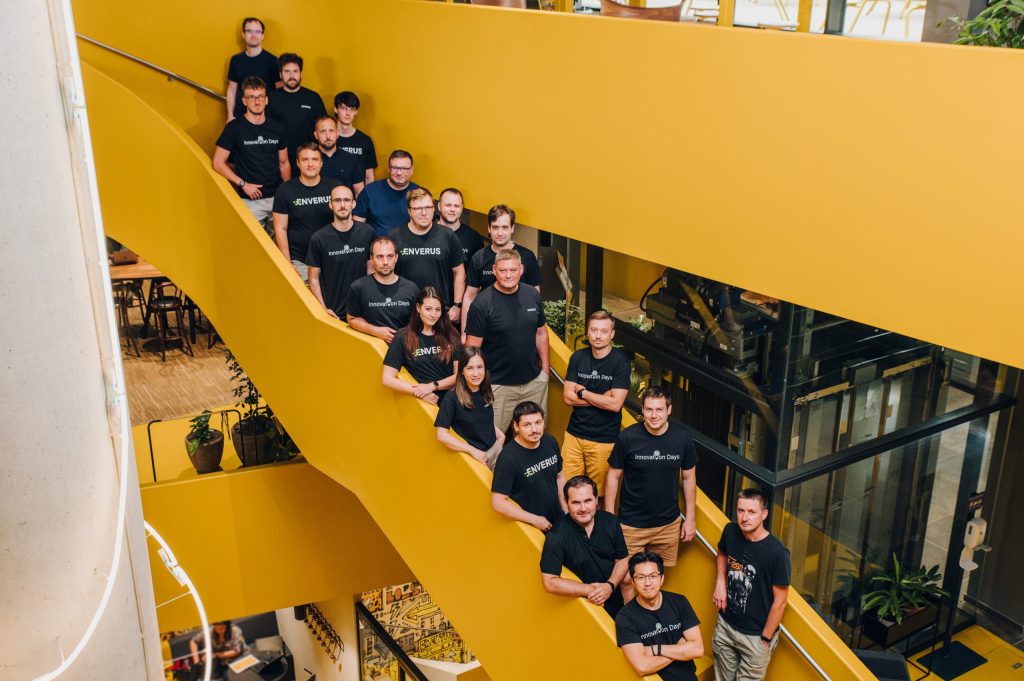
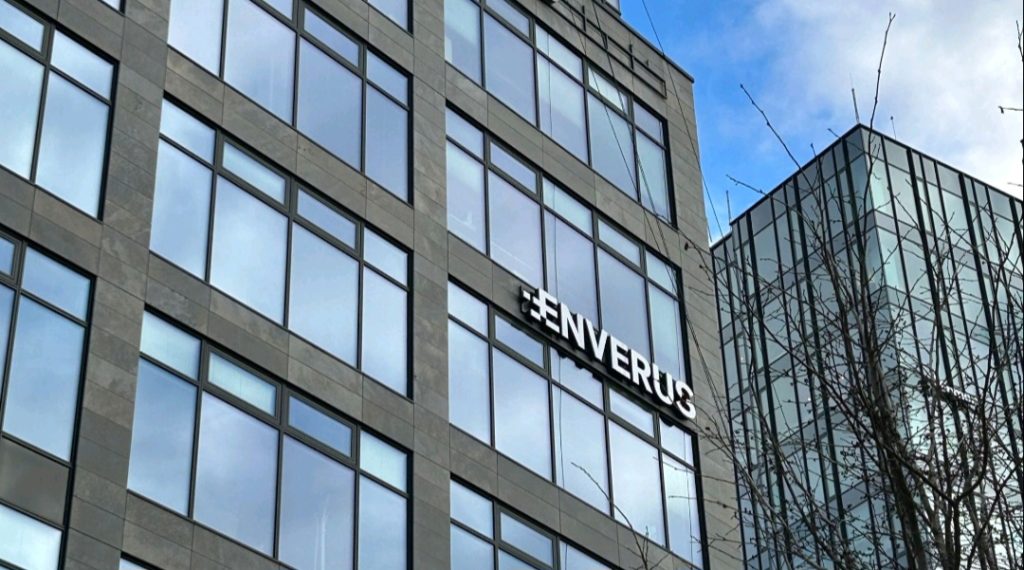
Clubco is often a place where great things begin. Companies start here with just a few people, launch their first projects, and eventually outgrow the coworking space. The Czech team of the global company Enverus arrived in 2022. Back then, there were twenty of them. Today, the Brno office employs more than a hundred people. Even though the company has since moved to its own office at Vlněna, its people still like to return to Clubco.
Founded more than twenty years ago in Texas under the name DrillingInfo, Enverus is now one of the world’s leading providers of software for the energy industry. Its platforms deliver critical data on resource extraction and the use of renewable energy. “At first, we focused mainly on tools for planning the extraction and transport of oil and natural gas, but we gradually expanded into other areas. Today, our fastest-growing segment is Power & Renewables – covering renewable sources, the planning of wind and solar power plants, energy transmission and blackout prevention,” says Jan Stoklasa, Managing Director of the Czech branch.
An ideal place for development and growth
The decision to open a new development center was made several years ago. “Our CTO had very good experience with Brno, as he had previously set up other branches here. Brno offers excellent accessibility – airports in Prague, Vienna and Bratislava are within two hours – and at the same time, it’s a university city with great potential for recruitment. We originally wanted to open in 2019, but everything was postponed because of covid,” Stoklasa explains. The Brno branch finally launched in 2022, and within three months it already had twenty employees. At that point, the team moved into Clubco.
“For companies looking to build a branch from scratch, it’s a great starting point. Clubco saves you a lot of administrative and operational hassle, so you can focus on what really matters – development, recruitment and team building. We had four dedicated offices, and up to a certain company size, it’s the ideal setup,” he recalls. “We grew quickly, and when we reached around forty people, we started to be a bit noisy for other clients. Even though we had our own offices, we met a lot in common areas, like the kitchen, which could be distracting. That’s when it became clear we needed our own space.”
Vlněna as a second home
By the end of 2024, the team relocated – but stayed within Vlněna. “We visited several office parks, but I think Vlněna has the best accessibility. It’s just a few minutes’ walk from both the main train station and the bus station and a major advantage is also the wide range of services in the immediate vicinity – from restaurants and cafés to shops and other amenities, which makes everyday life much easier for our employees. Thanks to our experience at Clubco, we knew from the beginning that we wanted to stay here. In the end, it proved to be the best choice in Brno.”
But for them, Vlněna isn’t just about strategic location. “In addition to excellent accessibility, we see great value in Vlněna’s overall ecosystem,” says Stoklasa. “The campus offers modern, high-quality office spaces that are highly flexible and allow us to grow without changing locations. It also creates a very vibrant and professional environment where people from various tech companies meet. That supports networking, knowledge sharing and an overall positive working atmosphere.”

They also see CTP, the manager of the office park, as a reliable and strong partner. “We appreciate the high-quality building management, technical infrastructure and the ability to resolve any operational needs quickly and efficiently. CTP takes a flexible approach and is willing to look for solutions that support our growth. Operational matters are handled promptly and transparently, which frees up our time and lets us focus on our core activities. Combined with the modern spaces and the overall atmosphere of Vlněna, our partnership with CTP represents a stable foundation for future development.”
Even though Enverus has moved from Clubco to its own offices, the connection remains. “Our people still take part in Clubco events. I’m planning to attend one myself soon,” Stoklasa smiles.
Sustainable growth
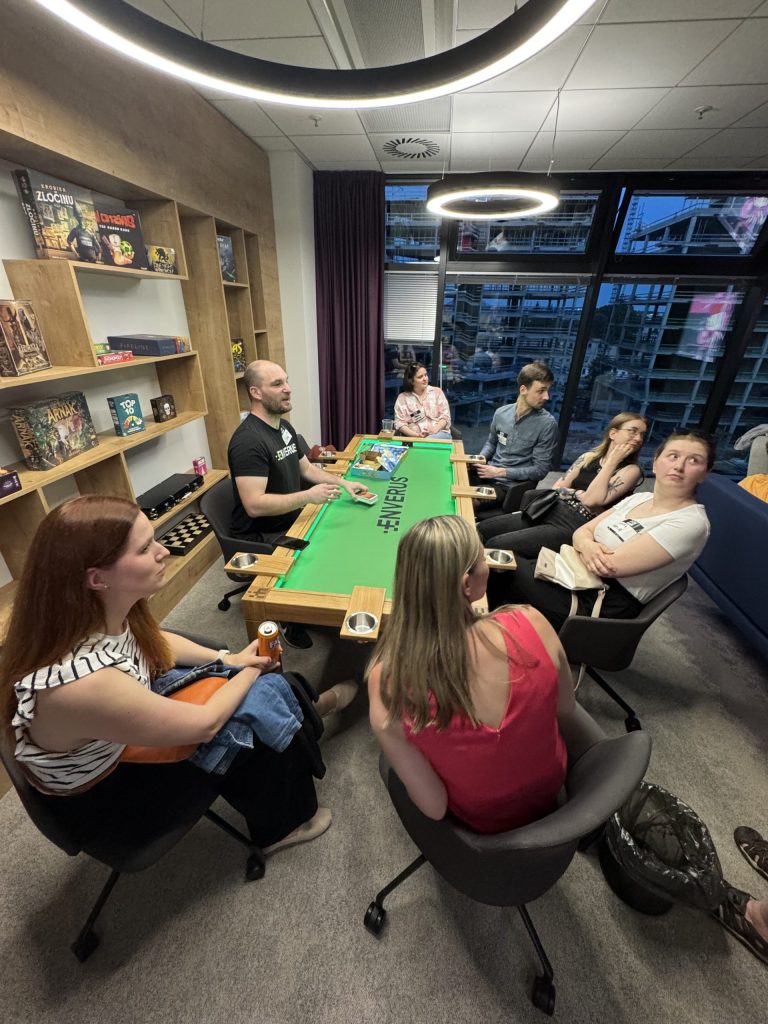
The team, now numbering around 120 people, continues to expand – and in May, Enverus added another floor to its offices. “We’re still hiring, so the numbers change practically every two weeks. Our goal is to reach 200–250 people within a few years,” says Stoklasa.
To keep growth sustainable, Enverus began by building a strong core of experienced professionals. “For the first two years, we focused solely on very senior positions – staff engineers, principals and similar roles. Once the team stabilized, we could start hiring juniors and strengthen collaboration with universities.”
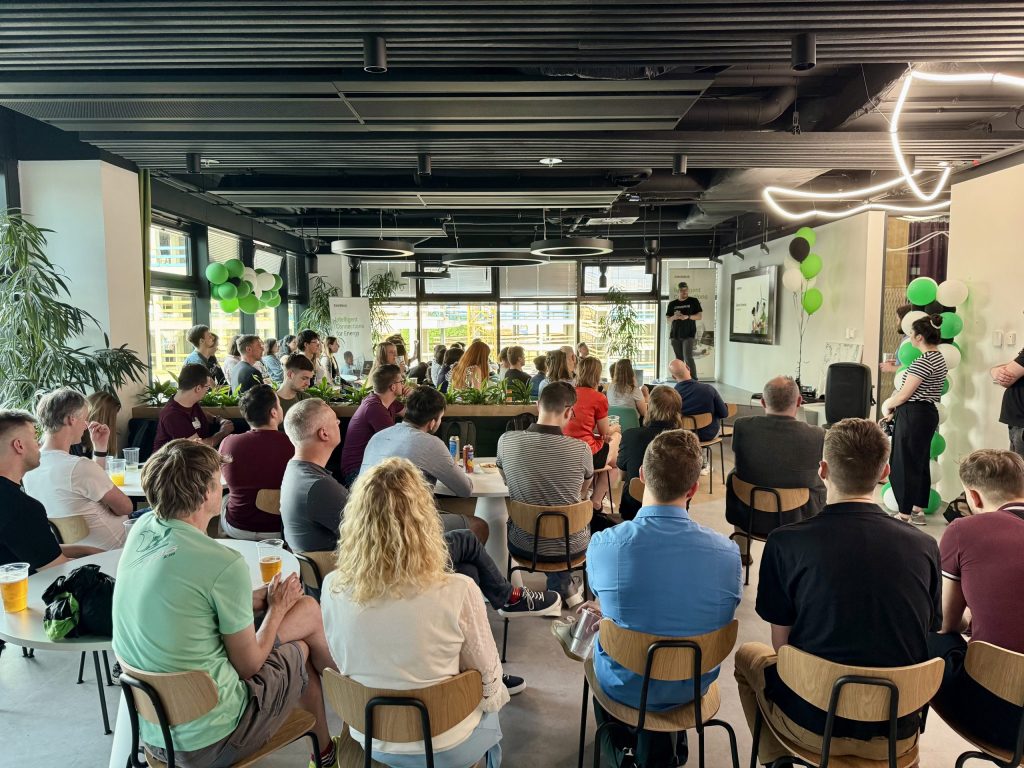
The company now organizes professional meetups (for example DATA mesh), participates in job fairs, and offers internships for students in technical fields. “But the foundation must always be strong senior people – that’s what everything else is built on,” Stoklasa emphasizes.
From fax to digitalization and AI
Enverus operates in 50 countries and serves more than 8,000 customers, including global giants such as Shell and BP.
The Czech branch functions as a key development center. “Brno was established partly so we could operate in a follow-the-sun model – ensuring there’s always someone in the world available to handle any issue. Previously, most developers were based in the U.S. or worked with contractors, but now we also have a center in India and a new branch in Spain,” Stoklasa explains.
Enverus helps its clients primarily with data processing and predictive modeling. “Our tools are used, for example, to plan new oil fields or to manage transmission networks – where surplus energy needs to be balanced to prevent blackouts.”
The company also provides software that helps businesses optimize carbon capture and reduce emissions as efficiently as possible. Its products further enable the digitalization and automation of outdated administrative or accounting processes – some large clients were still using paper invoices or even fax machines until recently. Artificial intelligence also plays an important role in handling vast amounts of data. “AI is a tool that helps us, but it doesn’t replace human creativity. It can combine learned data, but truly new ideas must always come from people,” says Stoklasa.
The energy of the future
Looking ahead, Enverus aims to continue helping streamline operations and planning in the energy sector. “Our goal is to simplify and enhance how our clients operate through advanced software tools. The direction of the energy sector may differ by region – Europe focuses on green resources, while other parts of the world have different priorities – but our vision is unified: to drive innovation and support sustainable development,” concludes Jan Stoklasa.
Clubco is more than just a place to work – it’s a space for sharing, learning and recharging both body and mind. The Health Day in Nupaky proved this perfectly. Healthy eating, exercise and homeopathy were discussed. The day wasn’t just about theory – yoga mats were rolled out too.
Clubco in Nupaky transformed into a health and wellness center on September 26. The event took place as part of the “Active September” challenge and offered members and guests a full day of inspiration – from nutrition and fitness to homeopathy and yoga. Whether it was body composition measurements, training tips or relaxation, everyone could take away something for their healthier self.

The most important movement is the one between sittings
The program was launched by a nutritionist and wellness specialist Klára Mastíková, who explained how energy metabolism works – and why even a simple walk for coffee has a fundamental impact on it.
“Energy needs are largely determined by basal metabolism,” she said. “Exercise, or EAT, is only a small, but important, part. What’s important is NEAT – everything you do outside of a timed workout. Taking the stairs, walking to the kitchen, or simply stretching during the day. It scares me that according to statistics, 50 % of people don’t care what’s happening to their bodies, they don’t move at all.”

She reminded that movement during a sedentary job not only burns calories, but also improves blood circulation in the limbs, concentration and pain prevention. When sitting for a long time, the back and tailbone suffer. The vertebrae and joints sink and lack sufficient hydration. You don’t have to sit like the person in the picture in the “manual of correct sitting”, it is important to change positions. It is also a good idea to try out adjustable desks, gymnastic balls or other aids. “I plan to borrow at least two adjustable desks here to try out,” commented the manager of the Prague Clubco Lucie Marešová.

If you regularly strain one side of your body at work, she recommends incorporating compensatory exercises. It’s also a good idea to get a squeeze ball if your hand hurts or becomes stiff from using a computer mouse or mobile phone.
One meeting after another, stress… Are you exhausted, don’t have time to eat a good meal in peace? We know that sometimes too. “A protein bar (with a better composition) always saves the day, but I certainly wouldn’t do it like that every day. If you’re often exhausted like that, you need to focus on it more comprehensively and plan better. Otherwise, I recommend kefir for a snack, for example with a slice of bread.”

We were able to use the TANITA measurement on site. Klára noted that for an average person, it is ideal to go for such a measurement about once every six months. Or sometimes it is enough to just take a picture of yourself in your underwear in front of the mirror and compare photos from different periods. And as for other tests, she recommends going for regular check-ups with a practitioner every two years. “Basic blood count, urine test, liver tests, blood sugar… But it is true that not every practitioner has such a conscientious approach, sometimes they will tick it off and not even do any tests for you. It is not a bad idea to use a test package once in a while – for example from SynLab. They have a nice description there and in the end it is sometimes better to pay for such a package yourself rather than haggle with your GP and then function based on the results for x years until you feel something might be off. In any case, I would regularly monitor my blood sugar level, especially if you are stressed or do not have an ideal diet. It is good to know that you are not counting on any major problems in the future.”
Look for motivation in the mirror
We have taken up the implementation of regular exercise in practice with Ondřej Daňa, a personal trainer at Padera Gym, who did a short but effective workout with us. Do you remember the classic warm-up from school PE classes? He would recommend returning to that, both before training and as first aid for stiff backs and shoulders. “They already knew what they were doing back then,” he said with a smile, while he practiced in a relaxed atmosphere. “Unlike being graded in PE.”

One of the regular questions related to exercise is finding motivation. You may also be wondering how to motivate someone who keeps saying they don’t have time to exercise. “I don’t actually motivate them. Ultimately, it’s up to each individual. If you don’t have time, you won’t have it. It’s about priorities. It’s good to find something you enjoy. And when clients ask me where to find motivation, I put them in front of a mirror.”
When conventional medicine doesn’t help
The next part of the day belonged to homeopathy and therapy. Zuzana Urbanová, who combines homeopathy with aromatherapy in her practice. She was brought to the field by her own family experiences with health problems that classical medicine could not solve.
“Western medicine only solves a problem when there is a major pathology. But before that, there are a lot of moments that lead to it – and you need to catch them early,” she explained. Most of her clients are people who have been seeing doctors for years who have been unable to help them. And also people in managerial positions, especially women.

According to Zuzana, modern homeopathy has little in common with the alternative. The dubious reputation of homeopathy has been caused by, for example, social networks and simplified videos without a deeper context. “People are then surprised that, for example, arnica did not help them with pain. It is similar to trying to treat a virus with antibiotics – they do not work because they are not intended for that. You have to choose the right homeopathic remedy for the problem. You need a professional for that. There are strict procedures.”
She also uses less traditional diagnostic methods, such as ZYTO measurement, which works on the principle of galvanic skin response to help detect imbalances in the body – such as mineral or vitamin deficiencies or overload. “It’s a tool that can make it easier for doctors to find the main problem.”
She also emphasized the influence of the psyche: “We live in an extremely stressful time. I deal with the psyche a lot with clients. Some of them also take antidepressants. Since homeopathy ‘lets things out’, aromatherapy calms emotions and brings the body back into balance,” she explained. “We are all dealing with something. A healthy person is a poorly examined patient. Relying only on a doctor and a pill is short-sighted,” she added.

Stretching and calming down
In the afternoon we changed into comfortable clothes and gathered on the yoga mats with Lucka Marešová. Using our breath and massage balls or a roller, we relieved tension in our bodies. There were sun salutations and the final shavasana.
She has been doing exercises for women since 2013 and earned her yoga certificate in 2017. “Yoga helped me get through a difficult time,” she revealed. “It helps me physically and mentally. And I’ve found that it’s not enough to just exercise in the morning or evening – the body needs stretching during the day too. All you need to do is do a simple exercise every hour. It also helps me get to know my own body, and over the years, find out how it works and what it can handle,” she said, and recommended practicing breathing techniques, deep yogic breathing, to calm down.

This wasn’t the first time Lucie had rolled out a yoga mat in Clubco. Last year, for example, she started yoga every Monday morning as early as 6:30 a.m. with some interested members. “Then we had pancakes. It was a big hit. Now I’ve decided that I’ll organize yoga and brunch every first Thursday of the month.”
She wants to build on the success of Health Day. “My dream is to motivate people to live a healthy lifestyle. I have my own limits, so I’d like to invite other experts to share their know-how and help people reboot their bodies and minds.”
In the future, she is planning more community meetings and educational events in Nupaky. She is in talks with DoToho! program or perhaps with Robert Vlach. She’s also planning a community barbecue. “I have already set up a grill. It will be open not only to Clubco members, but also to representatives of nearby companies. I would like to build the community even more. I originally wanted to grill sausages, but it’s probably not ideal here,” she announced with a smile.